
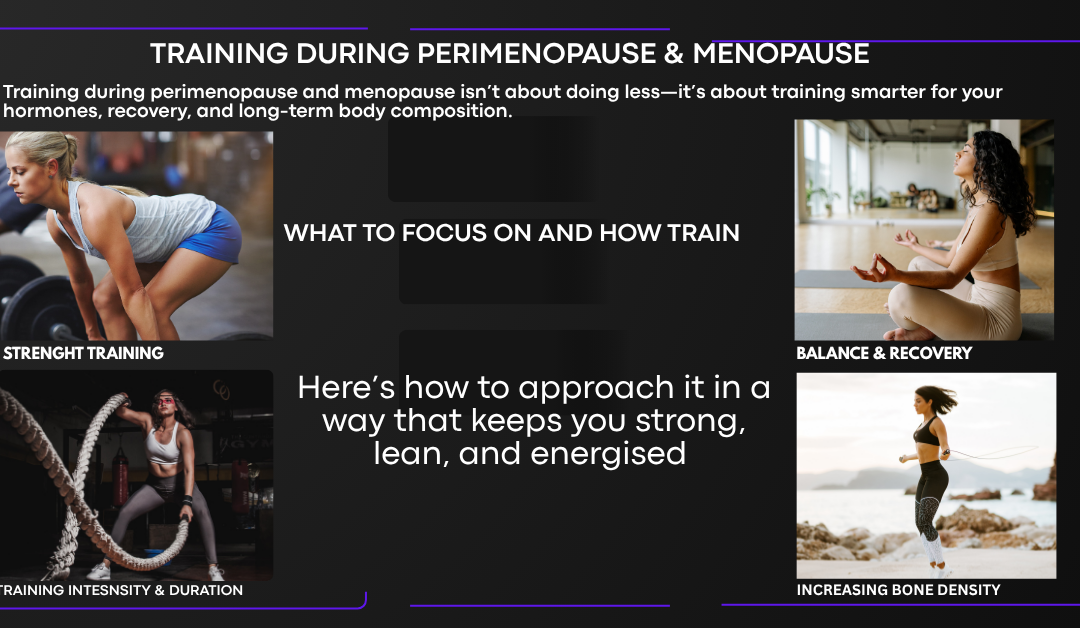
TRAINING DURING PERIMENOPAUSE & THE MENOPAUSE
- How to prevent muscle and bone loss OESTROGEN supports muscle stem cells (which help repair and rebuild muscle fibres), it protects skeletal muscle from apoptosis (cell death) & supports the function of mitochondria (the powerhouse of the cell) which produces energy the muscles need to contract and generate force. During perimenopause and menopause oestrogen decreases so that is why it is important to preserve lean muscle, and maintain bone density (reduced bone density increases the risk of osteoporosis).
- Ideally strength training sessions 3-4 times per week, essential to prevent muscle & bone loss.
- Progressive overload (gradually increasing weights) 8-10 reps, 2/3 sets this should be increased post menopause
- Compound lifts: squats, deadlifts, lunges, push/pull movements, jumping movements (helps to reduce bone loss, by creating high impact mechanical stress).
2. Train Intensity, Not Just Duration
Endless cardio becomes less effective It may be more effective to do
- Short, sharp intervals (boxing is excellent here)
- Sprint-style cardio or circuits
- 20–30 minutes is enough if intensity is high
3. Manage Cortisol (Stress Hormone)
Hormonal changes make women more sensitive to stress. It’s possible doing HIIT every day, long cardio sessions or under eating and over training may backfire leading to fatigue, poor sleep and ultimately weight gain.
It is important to listen to your body. Balance your training with rest days, yoga, pilates, or walking.
It is important to prioritise sleep (7-8 hours) and implement rest days.
4. Fuel Your Body
Under eating is one of the biggest mistakes.
Focus on:
- Protein at every meal (supports muscle and satiety). Aim for no less than 1.2g per kg body weight eg 70kg x 1.2g = 84g protein per day
- Aim to eat 20-25g protein within 2 hours of training to increase muscle protein synthesis and aid recovery.
- Whole foods, fibre, healthy fats
- Reduce processed foods from your diet
5. Adapt Month-to-Month (Especially Perimenopause)
Some days/week you may feel energetic and this is the time to push your training eg increase load, speed and power. On the days/weeks you have low energy focus on lower intensity and technique.
6. The Real Shift
This phase isn’t about shrinking yourself—it’s about
- Staying strong
- Protecting your metabolism
- Building a body that supports you long-term
- Women who train this way often end up stronger, leaner, and more confident than ever.